
Overview
The Data Integration and Analysis Division is the central setting for the South Carolina Integrated Data System. Through statutes and agreements, agencies and organizations entrust their data systems with the Data Integration and Analysis Division. These agencies and organizations recognized the need to better understand disparities and became the driving force to integrate data from these systems. The Integrated Data System enables the analysis of the use of services and crossover by individuals among these agencies and organizations, adds a new dimension to information for program management and evaluation, and allows for the identification and longitudinal analysis of cohorts of interest. By mutual agreement, the RFA receives data by from a wide array of state agencies and organizations. These data cover virtually all policy domains, such as health, education, employment, and service delivery. The data are integrated statistically on a project-by-project basis, with each participating entity providing explicit approval for the use of their data.
Requesting Data
The individual data sources in the Integrated Data System are kept separate and the Data Integration and Analysis Division provides tailored data services that include providing linkable data files, analysis of data and/or reports.
Release of information is under the control of the originating entity and each entity has its own application process. Therefore, any requests to link data must be approved by each participating agency and/or organization whose data you are requesting to link.
Requestors may be charged to cover staff time and computing costs. Turnaround time may vary depending upon the complexity of the request and receipt of approvals as necessary.
Data Integration and Analysis
Integrated Data System - Program Manager
Data Research and Analysis
“It is the entire human experience that influences health and social well-being and should therefore be captured in an integrated data system.”
Overview
The RFA’s mission is to provide independent research, analysis, and resources to facilitate informed policy decisions and administration of services. RFA staff is available to work with internal and external customers on complex research and/or statistical studies and projects, including the analysis and presentation of data in order to meet management and planning needs.
Data Integration and Analysis
Statistics & Health Resources
Data Analysis
The RFA can help with an array of statistical services. Feel free to contact us anytime no matter what stage you are at in your research. Statistical services we offer include
- Study Design
- Industry Definitions/Guidelines
- Statistical Consultation
- Statistical Analysis, Graphs, and Tables
- Analysis Interpretation and Discussion
Research Datasets
Research datasets can be provided using the integrated data system. The integrated data system contains information about the use of programs and services by clients of state health and human service agencies as well as non-profit and private entities. The integrated data system enables the analysis of services and crossover by clients among these entities. Release of information is governed by the originating entity and each entity has its own application process. Requests for linked data or a single data system must be approved by entities of interest.
Analytics Mapping Services
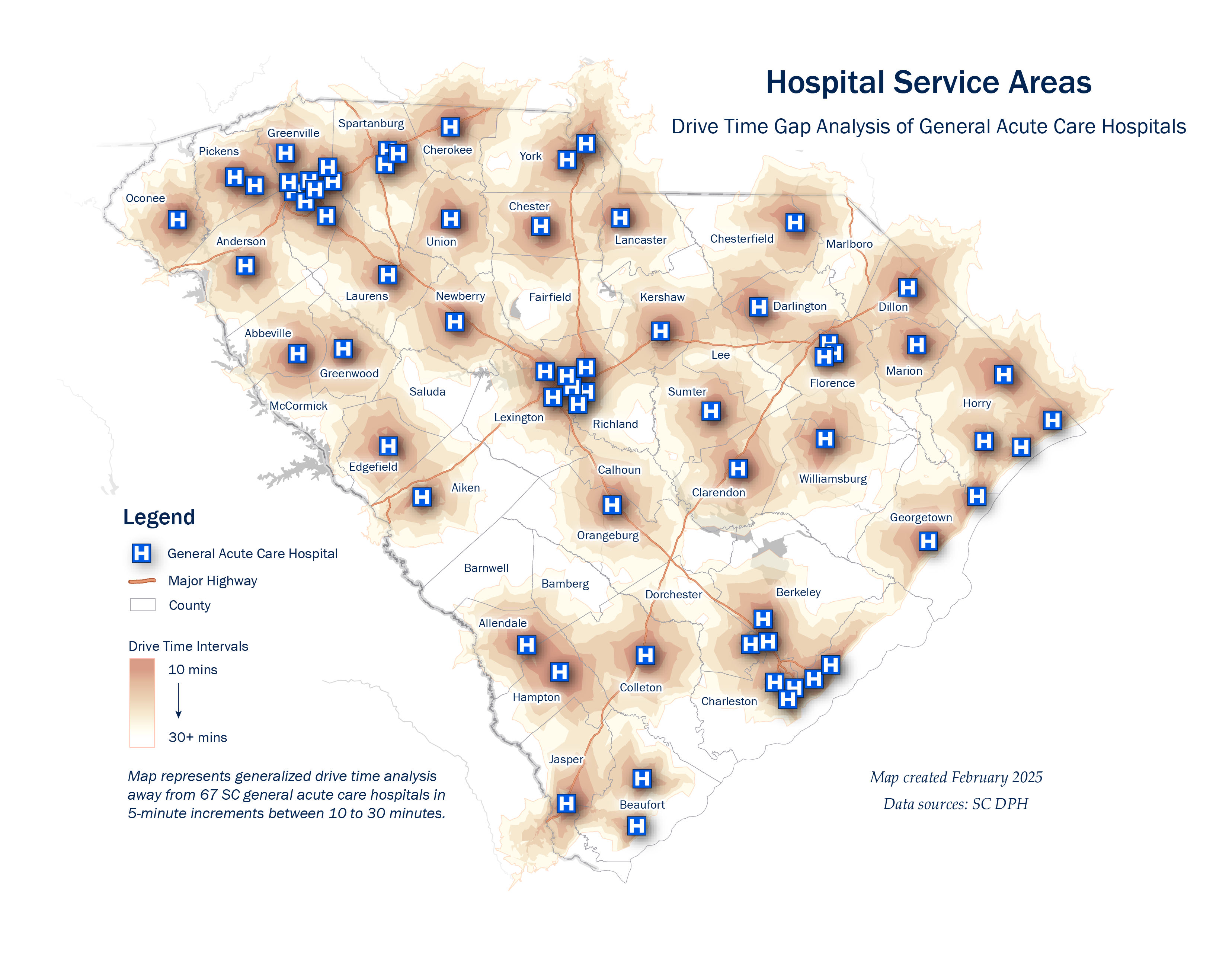
The Data Integration and Analysis Division of the SC Revenue and Fiscal Affairs Office offers a variety of mapping services that can help guide decision-making. RFA offers services ranging from custom maps to in-depth spatial analysis of the data.
Data Integration and Analysis
Online Analytics
Services Offered
RFA partners with state agencies, non-profits, researchers, and private entities. We offer services ranging from basic data linkage and mapping to custom application development and spatial analysis. Use of health and human services data from the Integrated Data System is subject to approval by the participating entities.
Data Integration
- Enrich datasets for researchers with geographic information
- Spatial data/GIS data linkage
- ArcGIS integration with other business intelligence software
Geocoding
- Convert address or locations into points on a map
- Address cleaning and standardization
- Big data and health data
Network Analysis
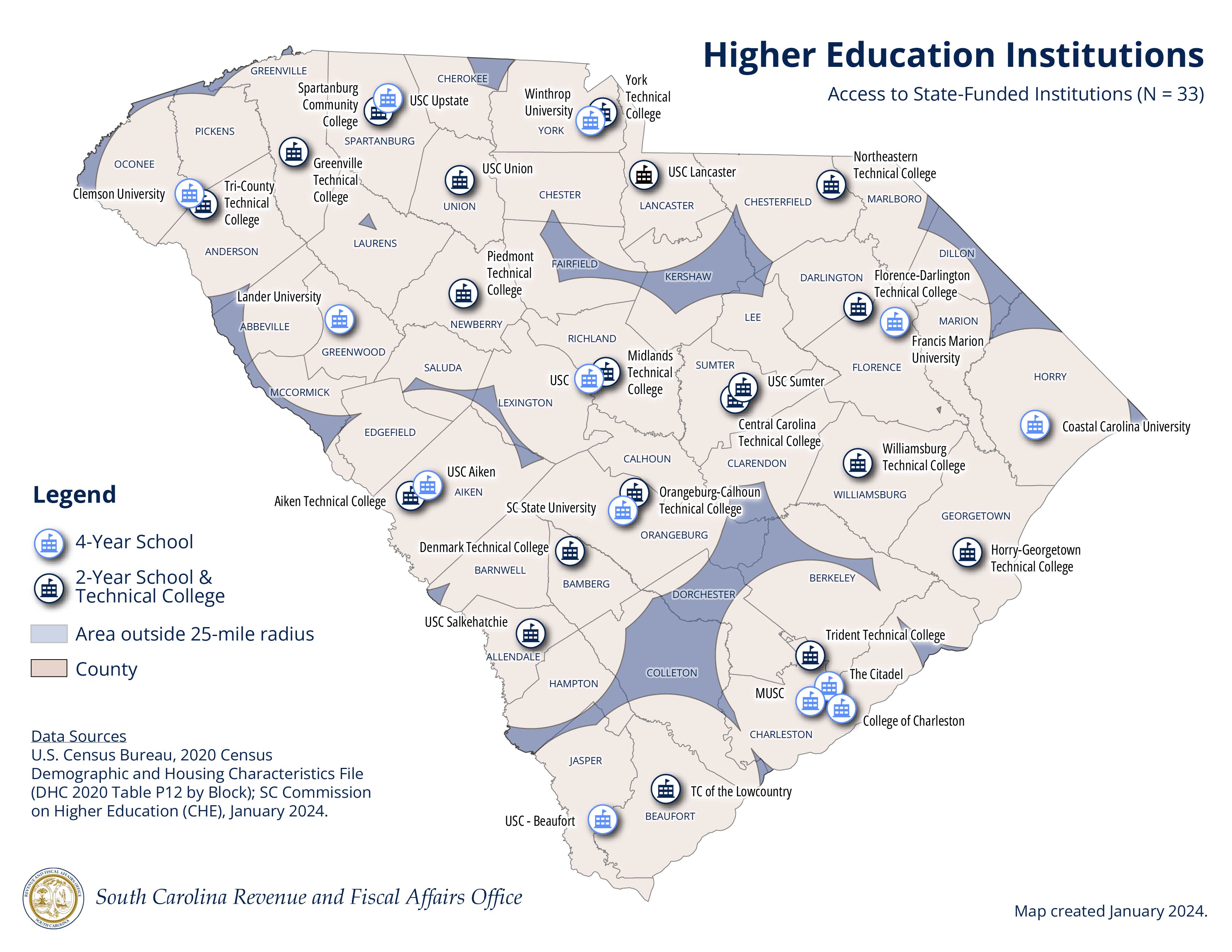
- Calculate distances and drive times
(e.g., between patients and providers) - Develop health catchment areas or service areas
- Facility coverage and optimal location analysis
Statistical Mapping & Spatial Analysis
- Cluster and hotspot mapping
- Weighted data for spatial analysis
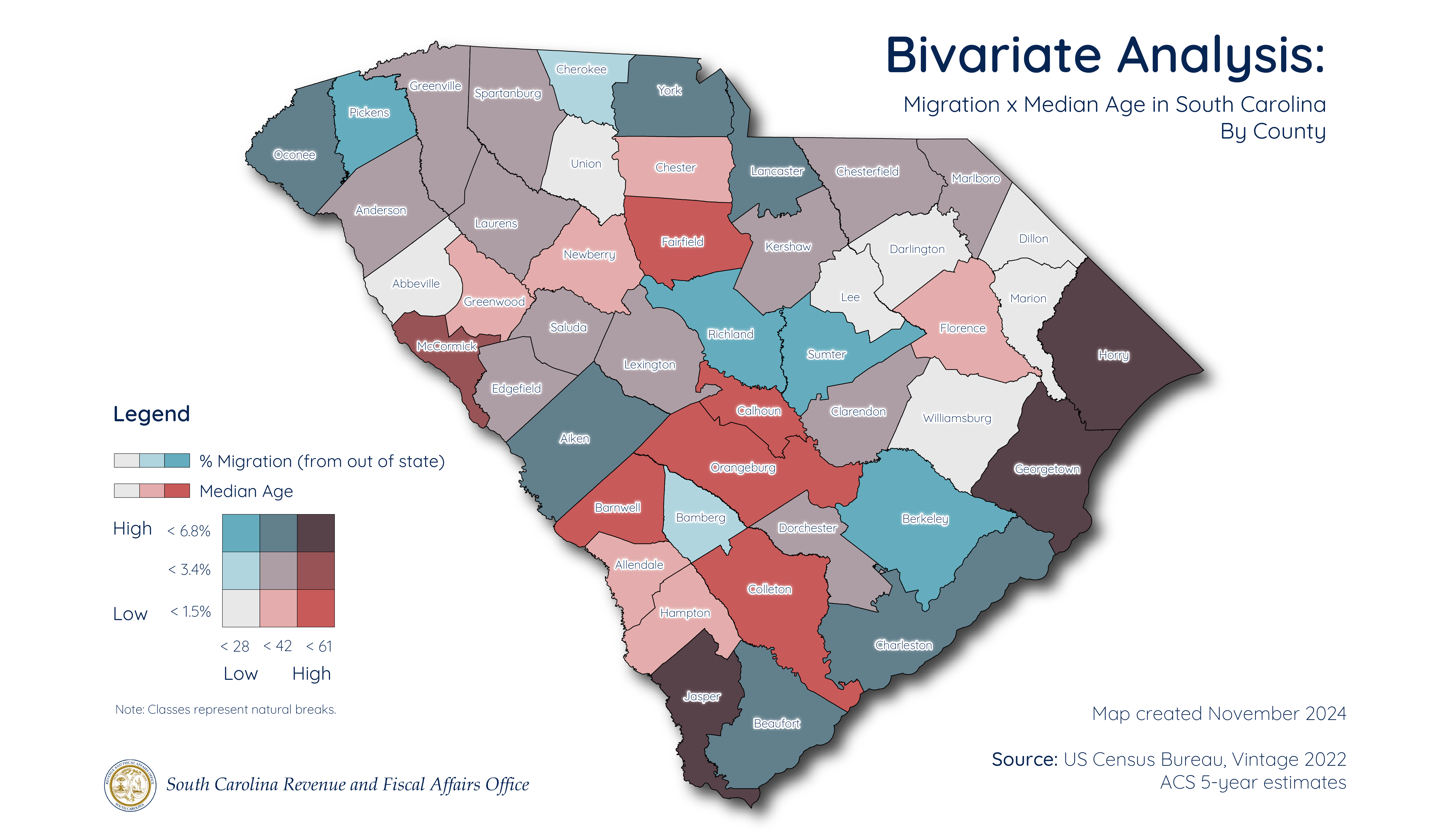
- Modeling of spatial relationships (e.g., bivariate analysis, regression)
Health & Demographic Research
- Prevalence or incidence rate disease mapping
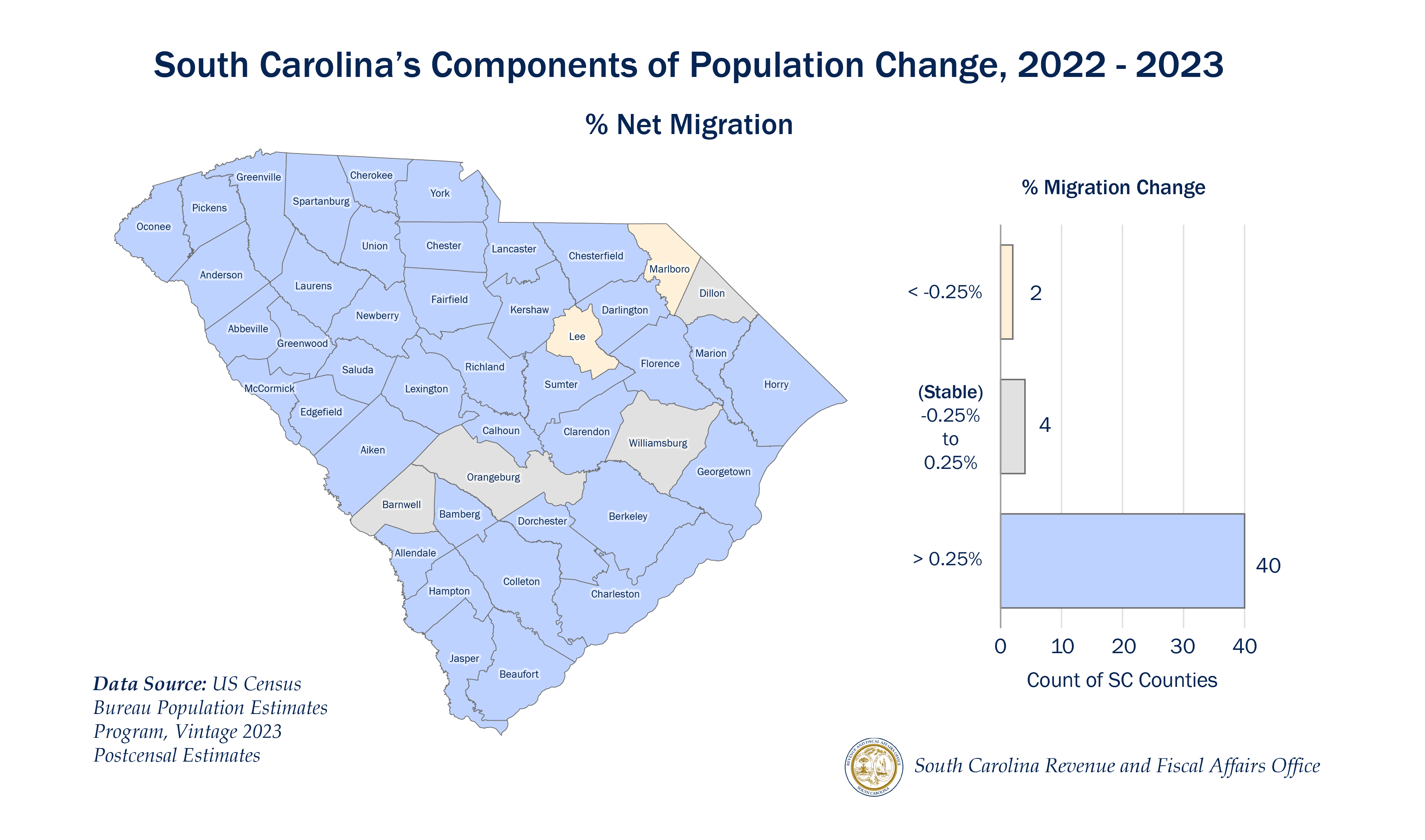
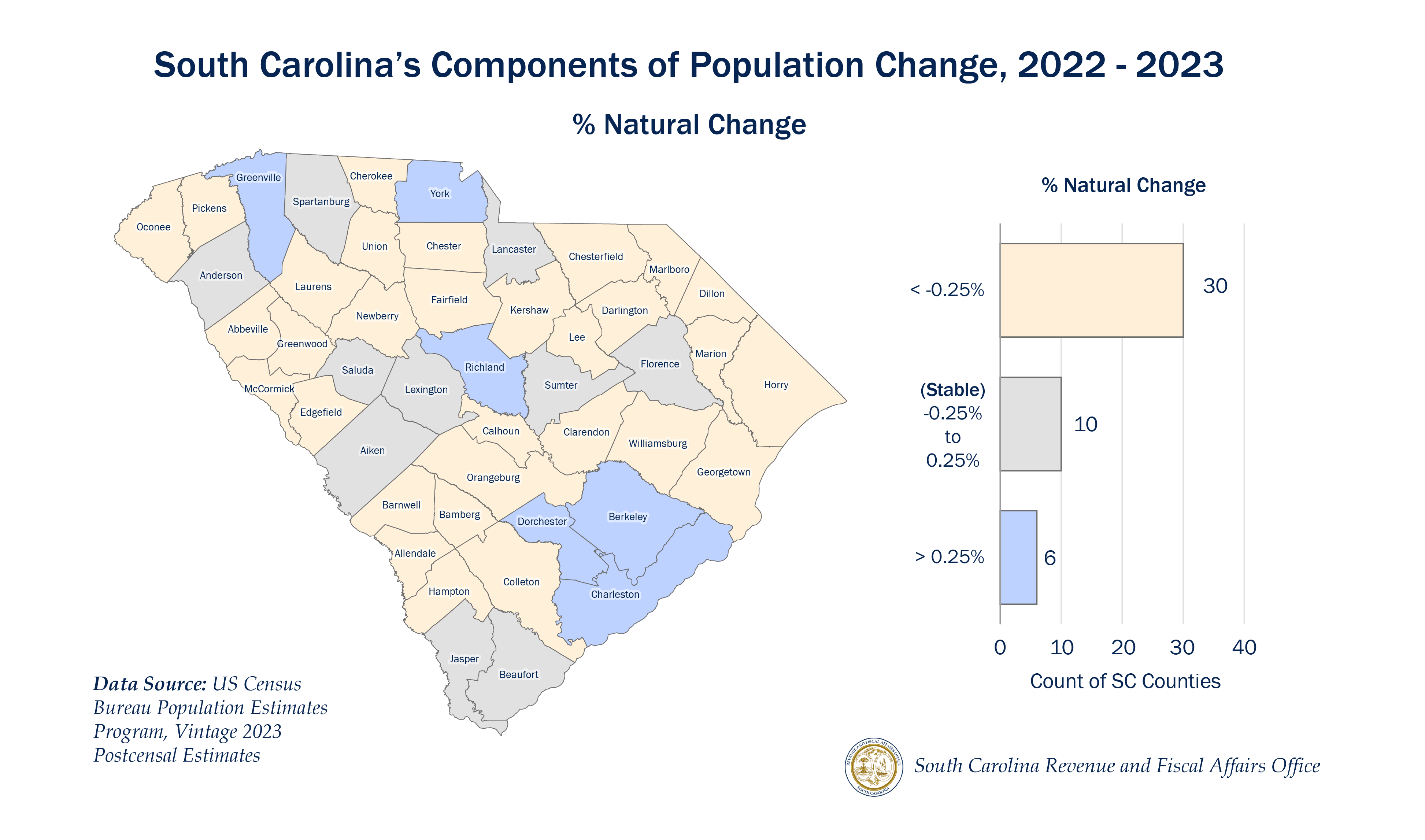
- Census data and population change mapping
- Targeting and intervention analyses with health data
Cartography & Mapping
- Custom professional maps with GIS and graphic design software
- Data-driven map books and reports
- Interactive Mapping and Online Application Development